


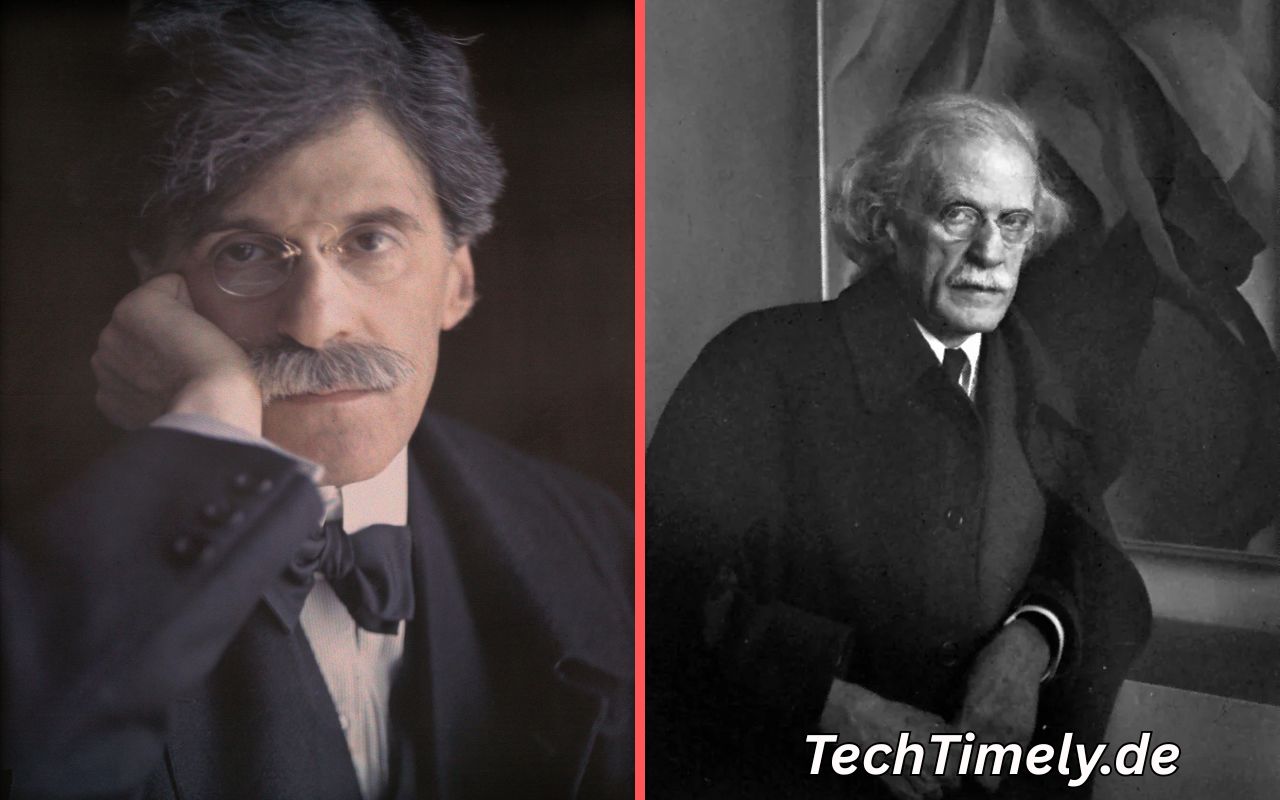
Alfred Stieglitz stands as one of the most influential figures in the history of photography, a visionary who transformed the medium from a technical process into a respected art form. Born in the late nineteenth century, Stieglitz dedicated his life to elevating photography and ensuring it was recognized alongside painting and sculpture. His journey was not simply about taking photographs but about reshaping how the world understood visual expression.
At a time when photography was often dismissed as a mechanical reproduction of reality, Stieglitz challenged conventional thinking. He believed that a photograph could carry emotion, meaning, and artistic depth. His work demonstrated that the camera could be a tool for creativity rather than just documentation. Through his relentless advocacy, he opened doors for photographers to be seen as artists rather than technicians.
For audiences in Germany, his story carries particular significance because his early education and artistic development were deeply influenced by European culture. His experiences in Berlin exposed him to artistic movements and intellectual discussions that shaped his philosophy. This cross-cultural foundation allowed him to bridge European modernism with American artistic innovation.
Early Life and Background
Alfred Stieglitz was born on January 1, 1864, in Hoboken, New Jersey, into a well-established and supportive family. His father was a successful businessman who valued education and creativity, providing Stieglitz with the freedom to explore his interests. Growing up in a financially secure environment allowed him to pursue artistic ambitions without the pressures that many others faced.
His early life was marked by curiosity and intellectual exploration. He showed interest in science and engineering, which later influenced his technical understanding of photography. However, his creative instincts gradually began to dominate, leading him toward artistic expression rather than purely scientific pursuits.
The decision of his family to move to Europe proved to be a turning point in his life. This transition exposed him to a broader cultural landscape and introduced him to new ideas that would later define his career. Germany, in particular, played a crucial role in shaping his artistic identity.
Education and Influence in Germany
Stieglitz moved to Germany in 1881, where he enrolled in a technical university in Berlin. Initially, he pursued engineering studies, but his interest soon shifted toward photography. During this period, he encountered influential teachers and thinkers who encouraged him to explore photography beyond its technical aspects.
Germany provided an environment rich in artistic and intellectual activity. Museums, galleries, and cultural discussions allowed Stieglitz to immerse himself in European art traditions. He began to understand that photography could be more than a tool for recording reality; it could be a medium for personal expression and artistic storytelling.
His time in Germany also brought early recognition. He participated in photographic competitions across Europe and received awards that validated his talent. These achievements gave him confidence and reinforced his belief that photography had the potential to be a serious art form.
Return to America and Career Beginnings
When Stieglitz returned to the United States in 1890, he brought with him a strong vision and a determination to change the perception of photography. At that time, photography in America was largely viewed as a commercial or scientific practice rather than an artistic discipline.
He began working actively in the photographic community, contributing to magazines and participating in exhibitions. His editorial work became a powerful platform for promoting artistic photography. Through his publications, he introduced audiences to new ideas and encouraged photographers to experiment with their craft.
Stieglitz also focused on building a network of like-minded artists. He believed that collaboration and shared vision were essential for progress. This approach helped create a community that supported his mission of elevating photography to the status of fine art.
The Photo-Secession Movement
In 1902, Stieglitz founded the Photo-Secession movement, a group dedicated to advancing photography as an independent art form. This movement rejected the idea that photography should imitate painting and instead emphasized originality and creativity.
The Photo-Secession movement played a critical role in redefining artistic standards. It encouraged photographers to explore new techniques and develop their own visual language. Stieglitz believed that each photograph should reflect the artist’s vision rather than simply replicate reality.
- The movement promoted artistic freedom and experimentation
- It challenged traditional views of photography
- It established a new identity for photographers as artists
Through exhibitions and publications, the movement gained recognition and influenced the direction of modern photography.
The Role of “291” Gallery
One of Stieglitz’s most significant contributions was the establishment of his gallery, known as “291,” in New York City. This space became a center for artistic innovation and cultural exchange, attracting artists and intellectuals from various fields.
The gallery was not limited to photography. Stieglitz used it to introduce American audiences to European modern art, including works by painters and sculptors. This approach helped create a dialogue between different art forms and expanded the boundaries of artistic expression.
“291” became a platform for emerging artists, giving them an opportunity to showcase their work. It played a vital role in shaping the modern art movement in the United States and reinforced Stieglitz’s position as a cultural leader.
Artistic Evolution and Style
Stieglitz’s artistic journey evolved significantly over time. In his early years, he was influenced by pictorialism, a style that emphasized soft focus and painterly qualities. However, he later moved toward a more modern approach that embraced clarity and abstraction.
This shift reflected his belief that photography should develop its own identity rather than imitate other art forms. He began to focus on composition, light, and subject matter in new ways, creating images that were both visually striking and emotionally powerful.
His work often captured the essence of a moment rather than just its appearance. He used photography as a means of exploring ideas, emotions, and human experiences, making his work deeply personal and expressive.
The “Equivalents” Series and Innovation
One of Stieglitz’s most groundbreaking contributions was his “Equivalents” series, which featured photographs of clouds. These images were not intended to document the sky but to convey abstract emotions and ideas.
The “Equivalents” series marked a significant departure from traditional photography. It demonstrated that a photograph could be purely expressive, without relying on recognizable subjects. This concept was revolutionary at the time and paved the way for abstract photography.
- The series emphasized emotional interpretation
- It challenged viewers to see beyond literal meaning
Through this work, Stieglitz proved that photography could be as expressive and imaginative as any other art form.
Relationship with Georgia O’Keeffe
Stieglitz’s relationship with Georgia O’Keeffe was both personal and artistic, making it one of the most significant partnerships in the history of modern art. They met in 1917, and their connection quickly grew into a deep and influential bond.
He photographed O’Keeffe extensively, creating hundreds of portraits that explored identity, emotion, and femininity. These images went beyond traditional portraiture, capturing the essence of her personality and artistic spirit.
Their relationship was mutually inspiring. While Stieglitz influenced O’Keeffe’s exposure and recognition, her work also impacted his artistic vision. Together, they contributed to the development of modernism and left a lasting legacy in the art world.
Contribution to Modern Photography
Alfred Stieglitz played a crucial role in changing how photography was perceived. Before his efforts, photography was often seen as a tool for documentation rather than artistic expression. He challenged this notion and proved that photography could be a powerful medium for creativity.
His contributions extended beyond his own work. Through his publications, exhibitions, and advocacy, he created opportunities for other photographers to gain recognition. He helped establish photography as a legitimate art form within museums and galleries.
- He promoted artistic photography through publications
- He organized influential exhibitions
- He supported emerging artists
These efforts had a lasting impact on the development of modern photography.
Connection to European and German Art Culture
Stieglitz’s connection to Europe, particularly Germany, played a significant role in shaping his artistic philosophy. His time in Berlin exposed him to new ideas and artistic movements that influenced his approach to photography.
He brought these influences back to the United States, creating a bridge between European modernism and American art. This cultural exchange enriched both regions and contributed to the growth of modern art.
For German audiences, Stieglitz represents a link between local artistic traditions and global innovation. His work reflects a blend of influences that continue to resonate in contemporary photography and art.
Later Years and Lasting Legacy
In his later years, Stieglitz continued to create and promote art, focusing on some of his most significant work. His photographs from this period demonstrate a deep understanding of form, light, and emotion.
He remained committed to supporting artists and advancing modern art until his death in 1946. His dedication ensured that photography would continue to evolve and gain recognition as a respected art form.
Today, his legacy is preserved through museums, exhibitions, and the continued influence of his ideas. His work remains a source of inspiration for photographers and artists around the world.
Conclusion
Alfred Stieglitz was more than just a photographer; he was a visionary who reshaped the art world. His efforts to elevate photography transformed it into a respected medium capable of expressing complex ideas and emotions.
His journey from a curious student in Germany to a leading figure in modern art demonstrates the power of passion and determination. He challenged established norms and created new possibilities for artistic expression.
Understanding Alfred Stieglitz provides valuable insight into the evolution of photography and the importance of innovation in art. His legacy continues to inspire, reminding us that creativity has the power to change how we see the world.
You may also read: Education and Personal Growth
